Home Care Agency Software vs AI-Native Care Operations Platform
Traditional home care agency software stores data. AI-native care operations platforms execute the work. Here's the practical difference — and how to decide what your agency needs.
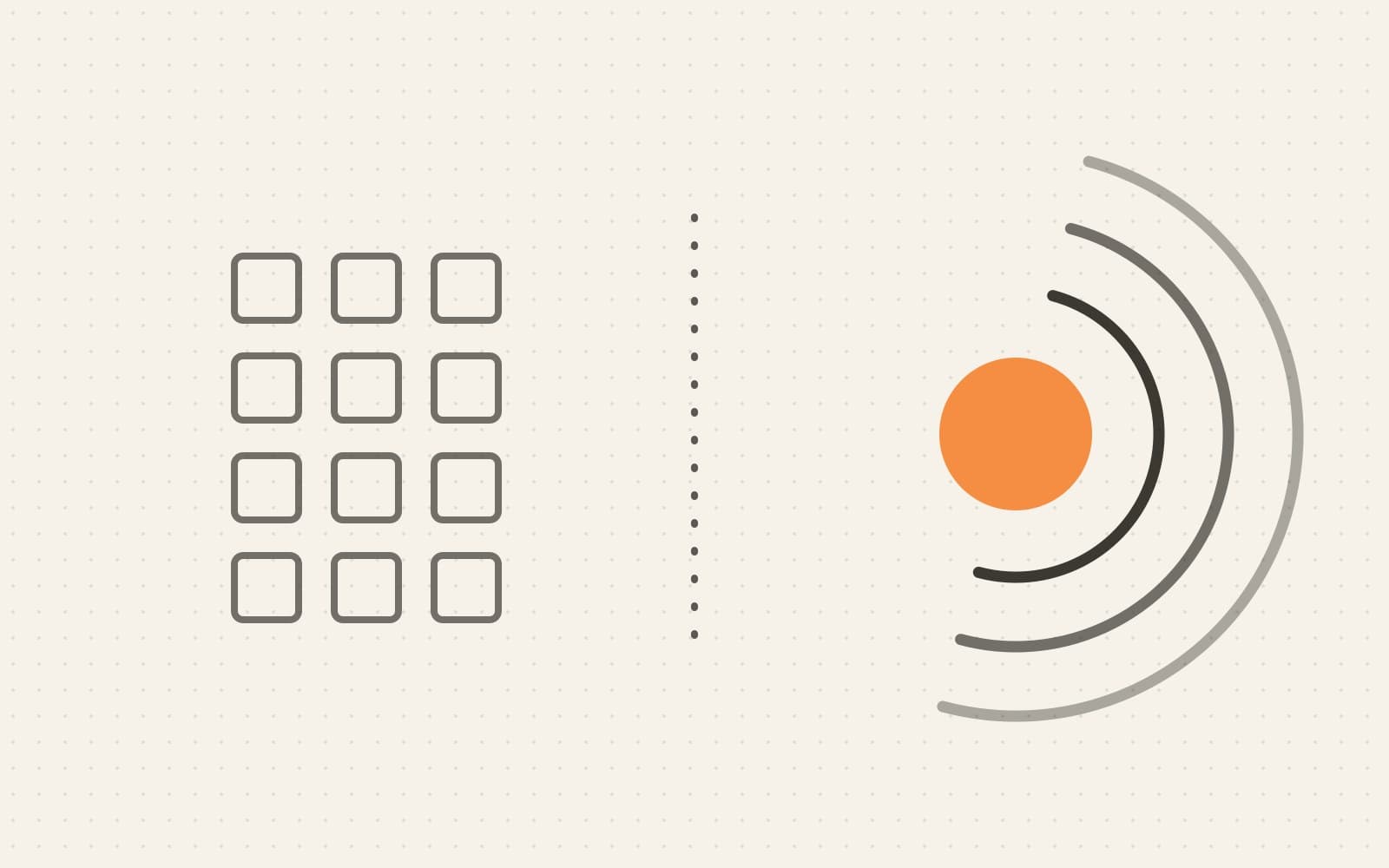
If you've been shopping for home care software lately, you've probably noticed two very different categories of vendor pitching you. One group sells "agency management software" — multi-line platforms that store everything in one place. The other (newer) group sells "AI-native care operations platforms" — agents that run the workflows.
They sound similar. They aren't. Here's the practical difference, where each one wins, and how to decide what your agency actually needs.
The short version
| Traditional home care agency software | AI-native care operations platform | |
|---|---|---|
| What it is | A system of record for clients, caregivers, schedules, billing | A system of execution — AI agents that run intake, call-outs, onboarding, EVV nudges |
| What it does well | Storage, reporting, audit trail, billing exports | Filling shifts, handling calls, reducing coordinator hours |
| What the human does | All the actual workflow | Exceptions, judgment, relationships |
| Capacity scales with | Coordinator headcount | Software |
| Best for | Agencies that need a system of record | Agencies that need a system that executes |
These aren't mutually exclusive. Many agencies use both. The question is which problem you're trying to solve right now.
What traditional home care agency software actually is
The category includes AxisCare, AlayaCare, WellSky Personal Care, HHAeXchange, CareSmartz360, Smartcare, and a handful of others. They share an architecture:
- A relational database of clients, caregivers, schedules, visits.
- A web interface for coordinators and admins.
- A caregiver-facing mobile app for clock-in/out and shift acceptance.
- Integration with at least one EVV aggregator.
- Reports for billing, payroll, and Medicaid compliance.
This is genuinely valuable. You can't run a 100-caregiver agency on spreadsheets. You need a database, and these tools are good databases for the home care domain.
What they don't do — by design — is execute. They display the open shift. They don't fill it. They list the missed clock-in. They don't fix it. They store the caregiver's documents. They don't chase them.
What AI-native care operations platforms do
The newer category includes Nestaid and a small number of peers. Architecturally:
- AI agents are the primary "users" of the platform's data.
- Each agent runs a workflow end-to-end (intake, call-outs, onboarding, EVV monitoring).
- The platform talks to your existing scheduling, EVV, and CRM systems where they exist.
- Humans handle exceptions, escalations, and decisions.
The bet here is that the transactional layer of running an agency — taking the call, filling the shift, chasing the paperwork — is the layer that benefits most from AI. The system-of-record layer (where data lives) is less differentiated and can stay where it is.
For a deeper definition, see AI-native home care software: what it means.
Where each one wins
Traditional agency software wins when:
- You need a single billing / payroll / EVV / scheduling source of truth and don't have one.
- You bill Medicaid and need a tool with deep state-by-state EVV integrations.
- You're a multi-line agency (home care + home health + community) and need one platform across modalities.
- You have heavy reporting / audit requirements and need pre-built reports.
AI-native platforms win when:
- Your coordinator team is overwhelmed by call volume, call-outs, or onboarding chaos.
- You're missing inbound calls and losing leads.
- Your fill time on open shifts is over 30 minutes.
- Your EVV exception queue is consuming hours of coordinator time per week.
- You want to scale caregivers without adding office staff.
- You want to add 24/7 inbound coverage without hiring an answering service.
Most agencies have both problems — but they have one of them more urgently. Solve the urgent one first.
How they coexist (the common pattern)
In practice, the agencies we work with usually have a traditional agency software in place (AxisCare, WellSky, HHAeXchange, etc.) and layer an AI-native platform on top to handle the workflows the legacy tool doesn't execute.
A typical stack:
- System of record: existing agency software (or a new one if there isn't one).
- EVV aggregator: state-mandated or chosen aggregator.
- AI-native layer (Nestaid): AI Receptionist + Coverage Coordinator + Care Plan Agent + Caregiver Onboarding Agent + EVV monitoring.
The legacy tool keeps doing what it does well (storage, reports, billing). The AI layer fills the workflow gap. Coordinators get their week back.
The honest tradeoff
A few real downsides of running both:
- Integration cost. Two systems means two integration points. Modern AI-native platforms are designed for this, but it's not zero work.
- Naming confusion. Caregivers may see "the app" vs. "the texts from the AI" and get confused at first. Onboarding messaging helps.
- Vendor management. Two contracts, two roadmaps. Pick AI-native vendors who play well with others.
In our experience, the operational gain (coordinator time saved, fill rate improvement, missed call recovery) is 5–10× the integration cost in the first year. But it's worth being clear-eyed about.
A practical decision framework
Ask these questions in order. The answers point you to the right starting place:
- Do you have a working system of record today?
- No → start with a traditional agency software. (Then add AI-native layer in 6 months.)
- Yes → continue.
- Are coordinator hours your bottleneck?
- Yes → AI-native layer next.
- No → maybe your bottleneck is elsewhere (caregiver recruiting, payor mix). AI won't fix it.
- Are you missing inbound calls?
- Yes → AI receptionist is the fastest ROI. Start there.
- No → continue.
- Is your fill time >30 minutes?
- Yes → Coverage Coordinator Agent.
- No → continue.
- Is EVV exception clean-up consuming hours per week?
- Yes → EVV monitor / nudge layer.
- No → you may be one of the few well-tuned agencies; focus on growth.
Pricing models — they're different too
This is worth flagging because it's a frequent source of confusion.
- Traditional agency software: per-seat or per-caregiver, monthly. Often $300–$1,500/month for an SMB agency.
- AI-native platforms: typically usage-based — per call, per shift filled, per onboarding completed. Pricing scales with the work the AI does, not with headcount.
Both are defensible. Usage-based pricing tends to align better with outcomes ("we paid for the shift we filled") but requires more careful forecasting in the first few months.
See Nestaid's pricing for the usage-based view.
What this means for the next 12 months
The pattern we're seeing across the home care market:
- Most mid-sized agencies will keep their existing system of record.
- They'll add an AI-native operations layer for the workflows their legacy tool doesn't execute.
- New agencies starting in 2026 may skip the legacy software entirely and go AI-native + a thin billing tool.
- Legacy vendors will keep adding "AI features," but the architectural gap is real and won't close quickly.
This is normal in any platform transition. The new layer (AI execution) doesn't replace the old layer (storage and reporting) — it stacks on top of it. The strategic question for your agency is whether to be early or late to the stack.
FAQ
Can I just wait for my current agency software vendor to add AI? You can. Be honest about the timeline though — adding "AI features" to a storage-architecture product is fundamentally different from being AI-native. Most legacy vendors will produce decorative AI features (search, insights) for 2–3 years before the foundational architecture shifts, if it ever does.
If I switch to an AI-native platform, do I lose my historical data? No. AI-native platforms are integration-friendly. Nestaid imports from your existing systems and writes back to them.
Won't running two platforms create training pain for my staff? Less than you'd expect. The AI does most of the workflow, so staff actually use both platforms less, not more. Onboarding takes about a week.
What about caregivers — do they need a new app? Caregivers typically interact with the AI via text and voice (which is where they already are) — not a new app. Nestaid doesn't require a separate caregiver app.
Is AI-native cheaper than traditional software? Not always, and that's the wrong question. The right question is "does it remove enough coordinator hours to pay for itself?" For most agencies the answer is yes, with a margin.
Pick the layer that solves the urgent problem
If you don't have a system of record, build that first. If your coordinator team is drowning and you're missing calls and fill times are slow — that's the AI-native layer's territory, not another report from a legacy tool.
Both can coexist. Most agencies running well in 2026 will have both. The question is just where to start.
Book a 30-minute demo and I'll help you map your current stack against your actual bottleneck. Or explore Nestaid's product directly.
— Rahul Chettri, Founder, Nestaid
Written by
Rahul Chettri
Founder, Nestaid