AI-Native Home Care Software: What It Means and Why Agencies Need It
Most home care software has 'AI features.' Almost none of it is AI-native. Here's what AI-native actually means — and why it changes the economics of running an agency.
Every home care software vendor now claims "AI." Most of it is a smart filter or a summary email rebranded with an icon. None of that is AI-native.
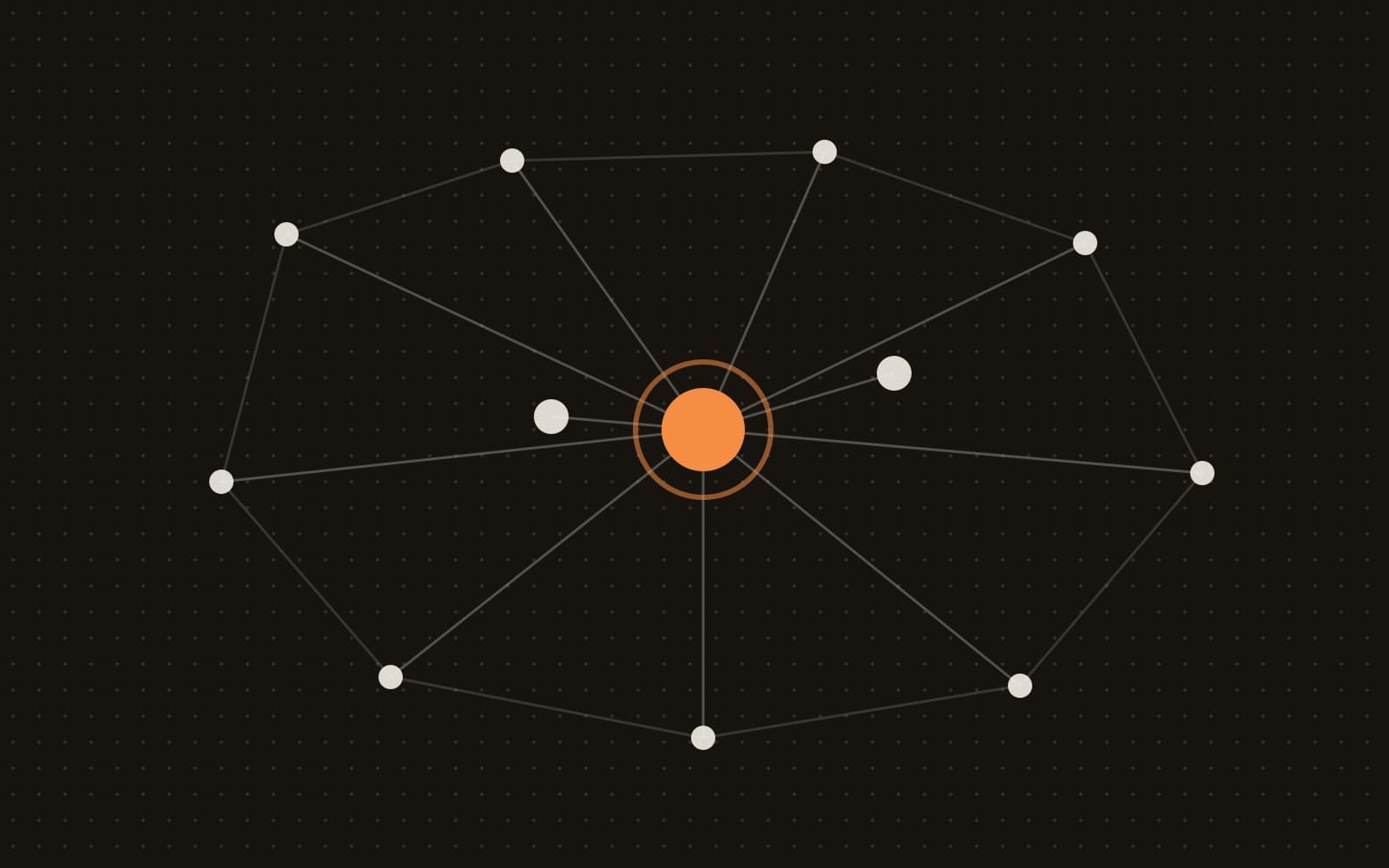
AI-native means the architecture itself is agents. The software doesn't watch the workflow — it runs the workflow. Once you've seen the difference, you can't unsee it.
This post defines what AI-native home care software actually means, why it matters operationally and economically, and how to tell whether a vendor is AI-native or just AI-decorated.
The definition (short version)
AI-native home care software is a platform where AI agents — not human coordinators — execute the day-to-day workflows of running a home care agency. The software is the operator. Humans handle exceptions, judgment calls, and relationships.
This is fundamentally different from "AI features" bolted onto legacy software, which still expects a human to do the work and uses AI as decoration.
A clear test: who's doing the work?
To tell whether a vendor is AI-native, ask one question for each workflow:
| Workflow | Legacy software ("AI features") | AI-native software |
|---|---|---|
| A new family calls at 9 PM | Voicemail → coordinator returns call next morning | AI receptionist takes the intake, books a discovery call, logs into CRM |
| A caregiver calls out at 6 AM | Coordinator manually calls/texts roster | AI coordinator opens parallel outreach, fills shift in under 5 minutes |
| A caregiver forgets to clock in | Exception report Friday → coordinator chases | AI nudges caregiver in real time, prevents the exception |
| A new caregiver is being onboarded | Coordinator chases paperwork by hand | AI agent collects documents, verifies credentials, books interview |
| A care plan changes | Coordinator updates 3 systems | AI propagates change, alerts the right caregiver |
If the human is still the operator, the software is legacy. The AI is a feature, not a foundation.
What makes software "AI-native" architecturally
Five things, all of which are observable in a demo:
1. Agents, not features
The platform is a set of agents that execute end-to-end workflows. Not "an AI search bar" or "an AI insights email." Real agents — an AI Receptionist that runs intake, a Coverage Coordinator that fills shifts, a Care Plan Agent that keeps documentation current, a Caregiver Onboarding Agent that runs paperwork.
2. The agents act, not advise
The Coverage Coordinator Agent doesn't say "Here are 5 caregivers who might cover this shift." It contacts them in parallel, confirms one, releases the others, updates the schedule, notifies the client.
3. The agents share state
The AI Receptionist taking a call-out hands directly to the Coverage Coordinator Agent. The Caregiver Onboarding Agent's credential data is what the Coordinator uses for matching. Agents see each other's context.
4. Voice + text + structured data, in one workflow
Home care doesn't happen at a screen. It happens on phones. AI-native means the agents can move fluidly between voice calls, SMS, and the system of record — without requiring anyone to log in to anything.
5. Humans handle exceptions and judgment, not transactions
The coordinator's day shifts from running 30 routine workflows to making 3 judgment calls. Agency owners don't need to hire to scale.
Why this matters economically
A typical 50-caregiver home care agency runs at 1.5–2 FTE coordinators, fully loaded around $150,000/year. Most of that time is transactional — call handling, shift filling, exception clean-up, onboarding paperwork.
When AI agents handle the transactional layer, two things change:
- Cost per shift drops sharply. Same agency, half the coordinator load.
- Capacity becomes elastic. Adding 50 more caregivers no longer requires another coordinator hire.
This is the unlock that legacy software couldn't deliver. Storage scales with caregivers. Coordinator labor does too. AI agents are the first layer where capacity becomes independent of headcount.
For the operational view of this, see how AI can help home care agencies grow without hiring more office staff.
Why "AI feature" software underperforms
Vendor pattern that doesn't deliver:
- Take an existing legacy product.
- Add an LLM-powered search bar.
- Add an "AI Insights" weekly email.
- Add a chatbot that books demos.
- Call it AI-powered.
This pattern produces marketing wins, not operational wins. Coordinator hours barely move. Fill rates don't improve. Exception queues don't shrink. Agencies still run real ops in a spreadsheet next to it.
The reason: none of those "features" actually execute a workflow. They display, recommend, or chat. The work is still manual.
What AI-native does NOT mean
To be precise:
- It doesn't mean "no humans." Coordinators are still essential. They handle judgment calls, relationships, and complex exceptions. AI-native frees them to do the work that actually requires them.
- It doesn't mean "untrustworthy AI making clinical calls." Care plan changes, eligibility decisions, and clinical judgments are not AI territory. Workflow execution is.
- It doesn't mean "rip and replace." Most AI-native platforms (including Nestaid) integrate with existing scheduling tools, EVV aggregators, and CRMs. They sit on top, not in place.
- It doesn't mean "magic." AI-native works because the workflows are well-understood and the agents are scoped narrowly. Hand-waving "AI for everything" is a different (worse) product.
Why this matters for the buyer
If you're a home care agency owner or director of operations, here's the practical implication:
The vendors you've been comparing for the last five years all look broadly similar — they're storage products with workflow add-ons. The new vendors entering in 2026 are different. They look the same on a feature matrix but operate in a categorically different way.
When you evaluate, don't compare feature lists. Compare:
- Time to fill an open shift on the platform (median, with proof)
- Coordinator hours per 100 shifts
- % of inbound calls handled without human pickup
- EVV exception rate
- Caregiver onboarding cycle time
These five numbers separate AI-native from AI-decorated. For the full evaluation framework, see best home care software features agencies should look for.
How Nestaid is AI-native by design
Nestaid was built around four agents from day one:
- AI Receptionist (Nessa) — runs every inbound call, 24/7. Intake, call-outs, caregiver questions, client requests. Integrated with the scheduling system, the CRM, and the EVV aggregator.
- Coverage Coordinator Agent — opens replacement outreach the moment a call-out lands. Fills shifts in under 5 minutes on median.
- Care Plan Agent — keeps care plan documentation current, surfaces changes to the right caregiver, alerts the coordinator when risk markers update.
- Caregiver Onboarding Agent — runs document collection, credential verification, interview scheduling, and the day-1 follow-up sequence.
Agencies using Nestaid report 80%+ reductions in coordinator time spent on transactional workflows. The coordinator still works — but on exceptions and relationships, not on chasing voicemails.
FAQ
Is "AI-native" just marketing? It can be — if a vendor uses the term but the demo still requires a human to do every workflow step. The test is simple: ask to see an end-to-end call-out filled by the software with no human intervention. If they can't show that, the term is decoration.
Does AI-native mean less control for the coordinator? The opposite. Coordinators get full transcripts, audit logs, manual override, and configurable escalation rules. Most coordinators end up trusting the AI more than they expected because they can see exactly what it did and why.
What about HIPAA and patient privacy? AI-native vendors should be built HIPAA-conscious from the architecture up — encryption, access controls, audit logs, BAA support, retention defaults. Nestaid is. Always verify vendor controls before sharing PHI.
Will this replace my scheduling software? Sometimes yes, sometimes no. Many agencies layer Nestaid on top of their existing scheduling tool. Others switch entirely once they see how much of the work is now redundant.
How small does my agency need to be before this is worth it? We've seen agencies as small as 8–10 caregivers benefit if the owner is also the coordinator. The decision factor is whether you're a person spending hours each week on transactional workflow.
The takeaway
AI-native home care software isn't a feature. It's an architecture where AI agents execute the workflows that have always been done by coordinators. The economics, the speed, and the experience for caregivers and families all shift.
If you've been evaluating "AI features" from legacy vendors and feeling like nothing has actually changed in five years — you're right. The change came in the form of a new category, not new features in old products.
Book a 30-minute demo and I'll show you what an AI-native platform looks like in motion. Or explore Nestaid's management, scheduling, and AI onboarding layers directly.
— Rahul Chettri, Founder, Nestaid
Written by
Rahul Chettri
Founder, Nestaid